

Best Practices for Exterior Home Maintenance in Snowy Climates
It’s easy to think that winter means an end to outside home maintenance. Obviously no one is mowing grass or painting siding, but just because you can’t do a lot of things in the colder months doesn’t mean you should stop looking out for your house. Yes, now is a great time for binge watching your favorite shows, curling up with a book, or (my personal favorite) spending time playing in the snow, but if you ignore the snow outside your window you could be putting your home and wallet at risk. Here are a few things you can start doing now outside your home to stay warm and comfortable when you are indoors.
Remove Snow from Your Roof
Some years this isn’t a concern for most homeowners, but any time you have snow on your roof, that snow is insulating your house and trapping heat inside. To some extent this is good, but any issues in your roof and attic ventilation as well as freeze-thaw cycles can create expensive problems if left unchecked. When you’ve got 6 or more inches of snow built up on your roof, you should really consider raking the first few feet at least to prevent the ice dams and roof failure.
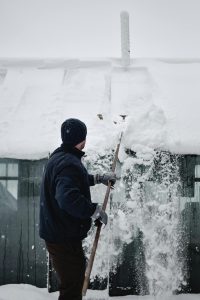
Once your roof has more than a few inches of snow on it, it’s wise to remove some to prevent damages.
When snow is left on your roof (especially in older homes or those with complex roof lines), ice can form a “dam” that stops future snow melt from running off the roof. This condition causes water to run into the attic space and results in the inside of your home sustaining moisture damage that can lead to mold, staining, and expensive repairs. While not all icicles on the edge of your roof indicate an ice dam, proactive maintenance can save you thousands in expensive ice dam removal and repairs later on.
The University of Minnesota Extension has a great article on their website about Ice Dams, what causes ice dams, and how to prevent them. I highly recommend it as reading for new homeowners, but if you’re just interested in the highpoints, here are some things to consider:
- Remove snow from the leading edge of the roof using a snow rake – I generally aim for 4 feet from the roof edge though even a couple can be helpful.
- Remove the snow that falls off from raking away from the foundation to avoid basement moisture issues come springtime.
- You don’t need to get your roof bare – doing so can cause damage to the shingles and reduce their lifespan.
- Do NOT climb on the roof – there’s a reason home inspectors don’t go on the roof in the winter, and they spend a lot more time on roofs than the average homeowner.
In really heavy snow years, removing snow also prevents excess weight that can break roof members/ rafters in your attic. The average home is built for not more than a 35 lb/sf load rating, which can be exceeded by 12 inches of wet, heavy snow.
Don’t Let Snow Accumulate Around Your Foundation
This is, admittedly my least favorite job in the winter; especially after you’ve raked the snow from your roof and it sits just under the eves of your roof. Within minutes it’s compacted and you have to carve out shovelfuls. Still, it needs to be done to prevent water intrusion into your basement when it all starts melting. If the dirt around your home is well graded (slopes AWAY from your house) this is less of a concern, but any back pitching of the ground next to your home can direct the water into the lower level of your home. People with older homes in the metro area know this better than others as these homes often have sidewalks that have sunk right next to the house.
Shoveling the snow away from the edges of your house prevents water intrusion, and in some cases can prevent critters from burrowing through the snow and finding a way into your home. The most common critter to come in would be mice, and I’ve yet to meet a homeowner who is excited to share their home with a mouse. The best practice here is to get the snow away from the eves (overhang of your roofline). This usually means pulling snow back 3 feet or more from the siding of your home. A good rule of thumb is that you should be able to walk all the way around your home and not get snow in your boots.
Ensure Intakes and Exhausts are Clear and Unobstructed
Around your home you hopefully know where exhaust vents, furnaces, water heaters and other intakes/exhausts exist. Similar to the previous section, keeping these clear of snow and debris ensures you have safe, breathable air in your home and that your appliances work properly. At best, a clogged intake creates a place where mice can enter your home and at worst it can lead to dangerous buildup of gasses such as carbon monoxide. In rare cases, ice can form on high efficiency furnace exhausts. It’s important to call an HVAC technician if this occurs because your safety is at risk due to this condition.
Ensuring that dryer vents, exhaust fans and other openings in the side of your home are free and clear of debris ensures your safety and comfort through the winter. If your home has a gas meter on the outside, this should also be cleared of snow.
Other Best Practices
Last winter I wrote a post about prevention of issues inside and outside your home. If you haven’t read that yet, I encourage you to do so HERE. As a final note, here are some other tips to incorporate this winter:
- Shovel decks using a plastic shovel – while they are generally built strong, decks last longer and can be used sooner in the spring if they are free of snow.
- Avoid using salt on paved surfaces – where traction is needed, it’s best to use things like “chicken grit” (also known as cherry stone) as these don’t damage the surface of concrete.
- Clean your gutters – if you didn’t clean/inspect your gutters in the fall, take advantage of a stretch of days above freezing to remove debris that can cause backups during period of melt.
- If you travel during the winter, have someone check on your home while you’re gone to avoid any surprises.
I promise you don’t have to spend too much time outside, but taking care of the big items on the exterior of your house is sure to make those long winter nights more enjoyable and worry-free!